
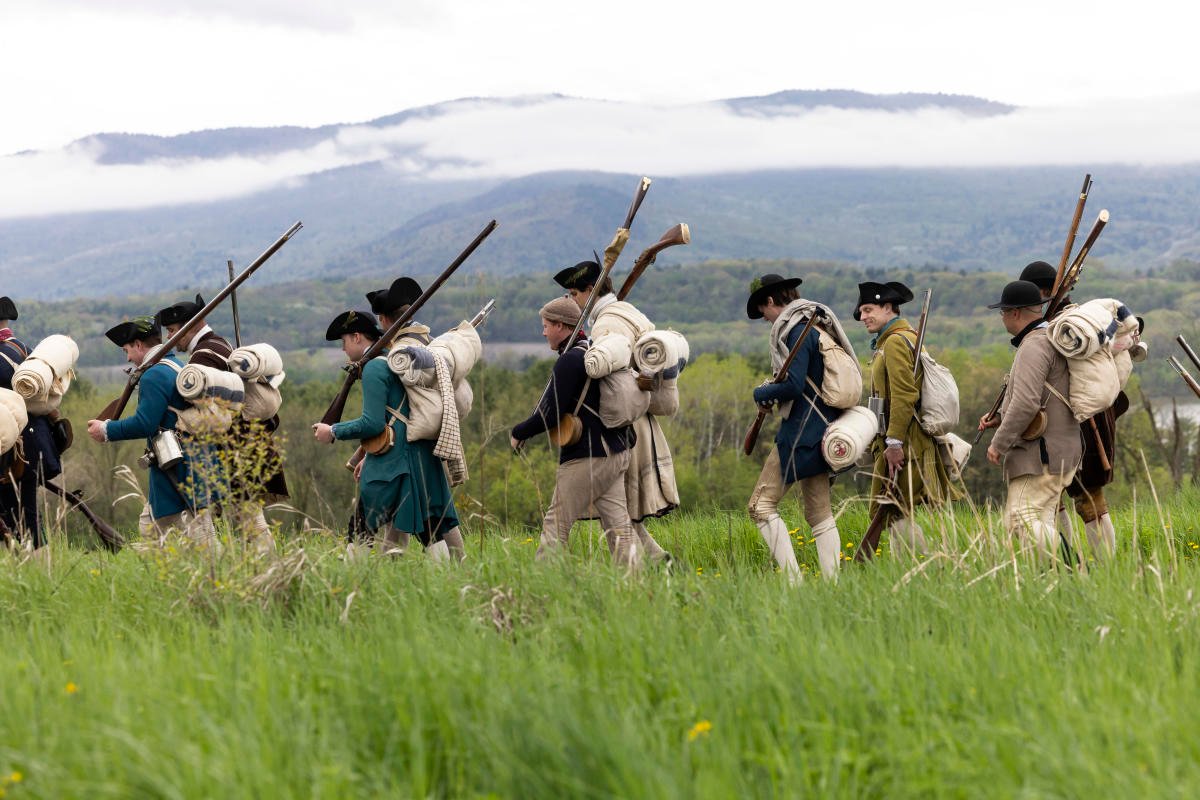
From the scenic shores of Lake Champlain to the bustling streets of Lower Manhattan, New York State served as a critical battleground in the fight for American independence. One-third of the Revolutionary War’s battles were fought in New York, shaping the course of history. Whether you’re a history buff or curious traveler, New York offers an unparalleled journey through the Revolutionary War era.
Explore this timeline of some of the pivotal Revolutionary War moments that happened in New York State and discover the historic sites, museums, and battlefields you can visit today to see where history unfolded. From George Washington’s dramatic retreats to the Continental Army’s critical victories, discover the moments that tell the story of the birth of a nation as it happened in the Empire State.
1. The Capture of Fort Ticonderoga (May 10, 1775)
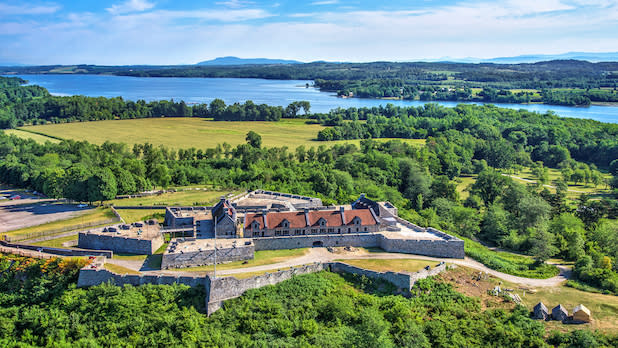
Fort Ticonderoga / Carl Heilman II
WHAT HAPPENED: Ethan Allen and Benedict Arnold, along with a band of Green Mountain Boys, captured the British fort located on the shores of Lake Champlain in a sneak attack, marking America’s first victory in the Revolutionary War. This not only secured passage north to Canada, but also supplied the Continental Army with a cache of artillery that was used to drive the British out of Boston a year later.
VISIT TODAY: Experience the past in real time as you witness battle reenactments, live musket and cannon firing demonstrations, and meet costumed artisans crafting shoes and uniforms at Fort Ticonderoga (pictured). REAL TIME REVOLUTION ® programming reflects the evolving conflict and brings to life the experience of nearly three continuous years of war. Explore the fort and museum, take a relaxing stroll through King’s Garden, hike or drive up Mount Defiance for breathtaking Adirondack views, and see the fort from an entirely different angle aboard a narrated boat cruise out on Lake Champlain.
2. Battle of Brooklyn (August 27, 1776)
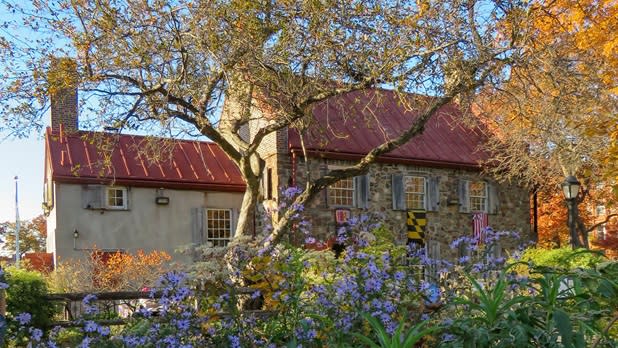
Credit: Bob Levine
WHAT HAPPENED: In the first major battle after the Declaration of Independence, as well as the largest battle of the entire war, British forces defeated George Washington and his army after cornering them in Brooklyn Heights. Washington managed to organize a strategic retreat, evacuating troops into Manhattan thereby preserving the army.
VISIT TODAY: The Old Stone House (pictured) in Park Slope marks the spot where the “Maryland 400” took a stand against the British, buying time for Washington and the Continental Army to make their escape. Visit the reconstructed Dutch farmstead where you can learn more about the battle through exhibits and special programs, including walking tours that trace the path of the Continental Army’s retreat. In Green-Wood Cemetery, you’ll find Battle Hill, the highest natural point in Brooklyn that was heavily fought over due to its strategic importance. Other sites to visit include the Dongan Oak Monument in Prospect Park and the Prison Ship Martyrs Monument in Fort Greene Park.
3. Battle of Harlem Heights (September 16, 1776)
WHAT HAPPENED: Following their earlier defeat in the Battle of Brooklyn, American forces successfully pushed back British troops in Harlem Heights, providing a much-needed morale boost to the Continental Army.
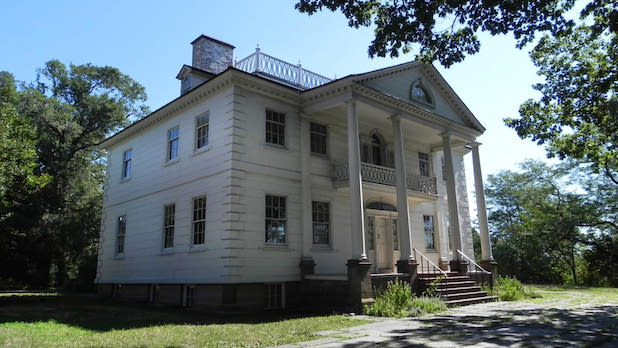
VISIT TODAY: The neighborhoods of Morningside Heights and Harlem look much different today. Columbia University and Barnard College now stand where the battle’s heaviest fighting took place. A historic marker south of Grant’s Tomb honors those who fought and died on the site within the serene Riverside Park along the Hudson River. Take a deeper dive into the past at Manhattan’s oldest residence, the Morris-Jumel Mansion (pictured), which served as George Washington’s military headquarters during this period of the war. While the house is temporarily closed for renovations, you can join a guided walking tour that starts at the house and travels one mile uncovering the history of the Revolutionary War, Gilded Age, Industrial Age, Harlem Renaissance, and more.
4. Execution of Nathan Hale (September 22, 1776)
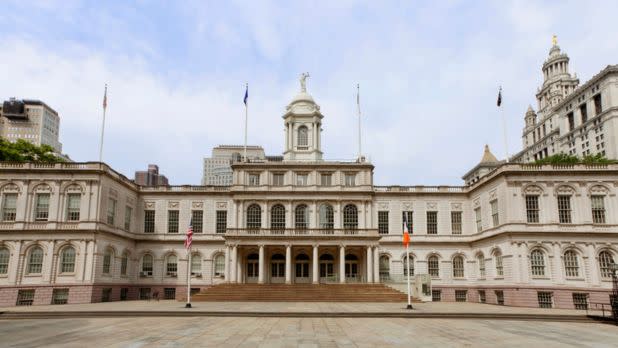
WHAT HAPPENED: American spy Nathan Hale was captured by the British and executed, making him one of the Revolution’s earliest martyrs. In his last words, he is said to have declared, “I only regret that I have but one life to lose for my country.”
VISIT TODAY: While the exact location of Hale’s final moments is not known, you can see a 13-foot tall bronze statue of Nathan Hale in City Hall Park. The destination is a stop on the New York City Revolutionary Trail, which highlights moments from the American Revolution in Manhattan stretching from The Battery to Federal Hall.
5. Battle of Valcour Island (October 11, 1776)
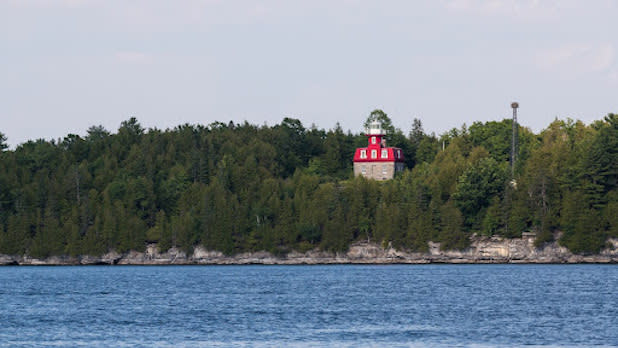
WHAT HAPPENED: This naval battle in Valcour Bay marked one of the first engagements for the newly-formed U.S. Navy, under the command of Benedict Arnold. While the fleet was defeated, it did succeed in slowing the British advance south, buying the patriots a critical year of planning.
VISIT TODAY: On the shores of Lake Champlain across from the Bluff Point Lighthouse on Valcour Island (pictured), you’ll find a historic marker near the Peru boat launch honoring those who fought and died in the name of freedom in this historic naval battle. Visit the Clinton County Historical Museum where you can see a gun carriage from the Royal Savage, Benedict Arnold’s original flagship. The Clinton County Historical Association and the Town of Peru are hosting a series of events commemorating America’s 250th anniversary including lectures and tours of Valcour Island ($30 per person).
6. Battle of White Plains (October 28, 1776)
WHAT HAPPENED: Following a series of defeats, Washington’s army faced yet another blow by British troops in the Battle of White Plains, forcing the Americans out of New York into New Jersey. While the patriots suffered yet another loss, they managed to escape to fight another day.
VISIT TODAY: Walk the grounds of the Battle of White Plains Park, the most visible remaining piece of public land on which the actual battle was fought. Interpretive signs throughout the park help visitors understand the tactical movements of both armies. Imagine Washington planning his next moves within the walls of two historic homes that once served as the general’s headquarters: the Elijah Miller House and Jacob Purdy House (open by appointment only). The Battle of White Plains even has connections to Sleepy Hollow, as legend has it a Hessian casualty in the fight may have been the inspiration for Washington Irving’s headless horseman. Today, you can visit Irving’s home and gravesite to learn more about the author and his haunting tale. Experience a large-scale reenactment of the battle during RevFest 250 October 24-25, 2026.
7. Battle of Fort Washington (November 16, 1776)
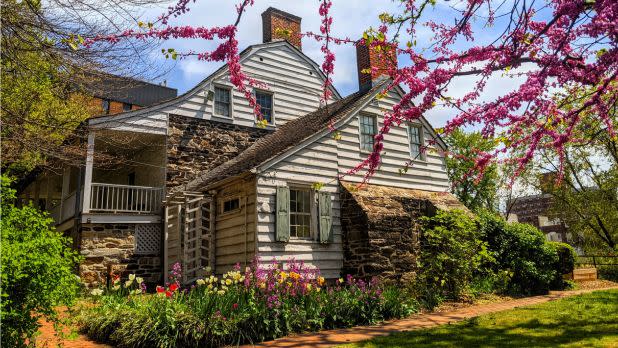
WHAT HAPPENED: Despite Fort Washington’s early minor successes against British warships, America’s final stronghold in New York City fell to British and Hessian forces, who captured the fort along with nearly 3,000 American troops in a devastating loss for Washington’s army.
VISIT TODAY: Today, a marble, bronze, and granite structure marks the site where the fort once stood at Manhattan’s highest natural point in what is now Bennett Park in Washington Heights. The stunning views of the Hudson River and the Palisades today offer a peaceful place of reflection in nearby Fort Washington Park where in times of war this view signaled the area’s strategic importance. Venture further north to the neighborhood of Inwood to dig deeper into the stories of the Revolution at The Dyckman Farmhouse Museum (pictured), where a reconstructed hut originally built in the area by Hessian soldiers during the Revolutionary War offers a glimpse into the lives of enemy forces.
8. Siege of Fort Stanwix (August 2-22, 1777) and Battle of Oriskany (August 6, 1777)
Credit: @daytrippingroc on Instagram
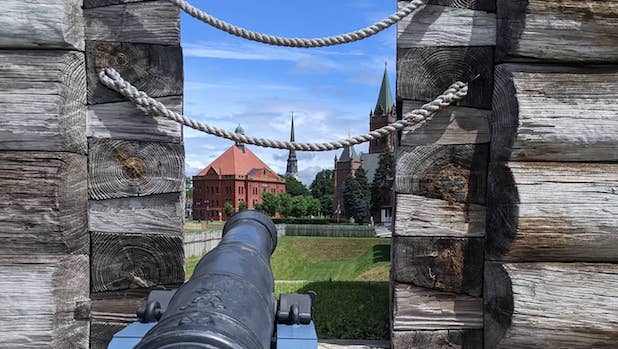
WHAT HAPPENED: British forces surrounded and tried to capture Fort Stanwix (then Fort Schuyler), setting off a nearly monthlong engagement centered in the Mohawk Valley. In that time, American forces sent to offer relief support were cut down by the British in the bloody Battle of Oriskany. While the fighting raged, Americans inside the fort devastated the vacant British camps. Weeks later, the British withdrew after Benedict Arnold deceived them into thinking he was approaching with 3,000 men instead of the actual 700. The failed siege contributed to the American victory at the Battles of Saratoga and Fort Stanwix earned the nickname “the fort that never surrendered.”
VISIT TODAY: Several sites preserve the Revolutionary War legacy across the Mohawk Valley. At the Fort Stanwix National Monument (pictured), a reconstructed fort, museum exhibits, archaeological artifacts, and living history programs bring the dramatic siege of 1777 to life. Hike through history on the trails of the Oriskany Battlefield State Historic Site and visit the Herkimer Home State Historic Site where you can tour the 1764 Georgian-style mansion that once was home to General Nicholas Herkimer, who died after sustaining an injury in the Battle of Oriskany. There’s even more to explore at the Oriskany Museum, Fort Plain Museum, and Steuben Memorial State Historic Site. On July 12th join Historian Joseph Robertaccio for a free exploration of Oriskany battlefield using aerial archaeology, 19th century photographs and eyewitness accounts to locate long lost reports of the battle.
9. Battles of Saratoga (September 19 – October 7, 1777)
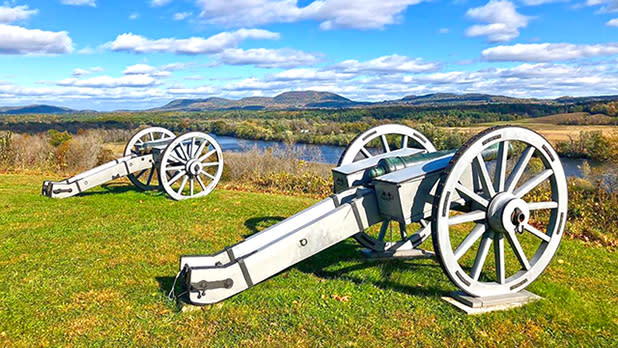
WHAT HAPPENED: In the autumn of 1777, American forces defeated British General John Burgoyne in intense battles at Freeman’s Farm and Bemis Heights. With his plans to gain control of the Hudson River Valley derailed, Burgoyne surrendered. The Battles of Saratoga became the turning point in the war as Americans gained the support of France, forming an alliance that would help the Patriots win the war.
VISIT TODAY: Saratoga National Historical Park (pictured) offers a powerful look at the battles that altered the course of American history on the very ground where they were fought. Stop by the visitor center to explore exhibits and artifacts, hike along The Wilkinson Trail or take a drive on the scenic Tour Road, and gaze up at the Saratoga Monument, a 155-foot stone obelisk that stands on the grounds of Burgoyne’s last camp. You can also stand in the spot where Burgoyne surrendered and visit General Philip Schuyler House, the restored country estate of the Continental general whose original home was burned by the British during their retreat. Don’t miss Saratoga 250 events in 2026 including a 4th of July celebration at the Saratoga Race Course, the Turning Point Festival, Surrender Day Ceremony, and more.
10. Burning of Kingston (October 16, 1777)
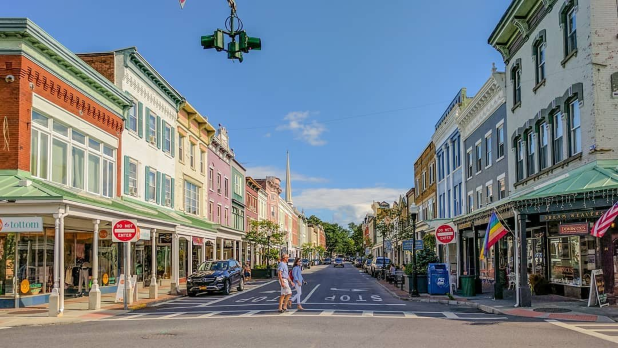
Credit: @jason_labuda on Instagram
WHAT HAPPENED: British troops burned much of Kingston, which at the time was serving as New York State’s first capital, torching hundreds of buildings and forcing the government to flee the city.
VISIT TODAY: Witness how Kingston rose from the ashes on a walking tour of the historic Stockade District (pictured) that’s home to historic landmarks, museums, and interpretive exhibits. The preserved eight-block area is filled with centuries-old buildings like the Hoffman House and Matthewis Persen House, as well as sites tied to the Revolutionary War era including the simple stone house where New York’s first Senate met. You’ll even find a handwritten letter from George Washington on display at the Old Dutch Church, where 77 Revolutionary War soldiers and New York’s first governor are buried. The city’s biannual commemoration of the Burning of Kingston, showcasing revolutionary history, dramatic reenactments, period costumes, live demonstrations, and more, will be held October 15-18, 2026.
11. Battle of Stony Point (July 16, 1779)
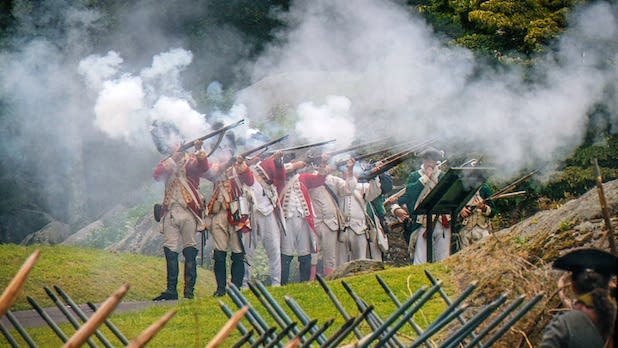
WHAT HAPPENED: A notable American victory late in the war led by Brigadier General Anthony Wayne who stormed the British fort in a surprise midnight ambush. Americans relied primarily on the use of unloaded muskets and fixed bayonets to maintain the element of surprise, employing a tactic that the British had used two years prior in a battle in Pennsylvania where Wayne lost 200 men. The American army swiftly captured the fort and the British soldiers surrendered. The victory provided a much-needed boost to Patriot morale.
VISIT TODAY: Experience one of the Revolution’s most dramatic American victories at Stony Point Battlefield State (pictured), exploring exhibits and artifacts in the museum (anticipated to reopen in July 2026), walking the battlefield grounds, and attending living history programs like the 247th Anniversary of the Battle of Stony Point on July 18, 2026, that will bring the 18th century to life through reenactments, musket firings, and more. Be sure to visit the 1826 Stony Point Lighthouse, the oldest lighthouse on the Hudson River, and enjoy sweeping views of the river.
12. Benedict Arnold’s Treason Exposed (September 23, 1780)
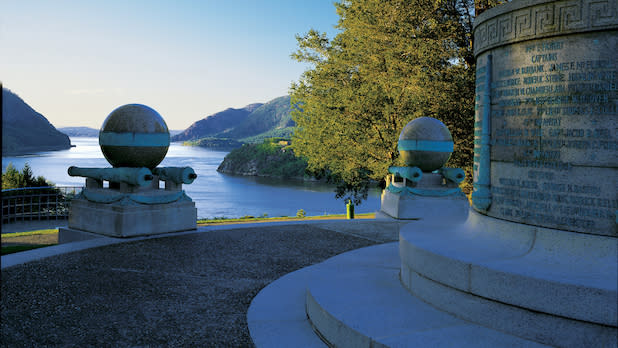
WHAT HAPPENED: Benedict Arnold became America’s most infamous traitor when his plot to surrender West Point was exposed by the capture of British officer John André near Tarrytown. Arnold fled on a British warship and later joined the British Army, leading their forces against the side he once fought for.
VISIT TODAY: Discover the site at the center of one of the war’s greatest dramas at West Point, which played a vital role throughout the American Revolution. Washington called West Point’s position the “key of America.” It was first occupied by the U.S. Military in January 1778 and in April 1778 the Continental Army stretched a great iron chain across the Hudson River to stop British ships. Guided tours explore the history of the fortress that Arnold sought to betray and take you to important sites like Trophy Point (pictured) where you can see the towering Battle Monument and links from the great chain. To delve even deeper into the André-Arnold affair, trace the conspiracy across the Hudson Valley and visit locations where the events of 1780 unfolded. Grab a bite at the ‘76 House, a 300-year old structure where John André was held prisoner, and then explore the artifacts of the DeWint House where George Washington officially signed the death warrant.
13. Battle of Johnstown (October 25, 1781)
Credit: @historiantosaratoga on Instagram
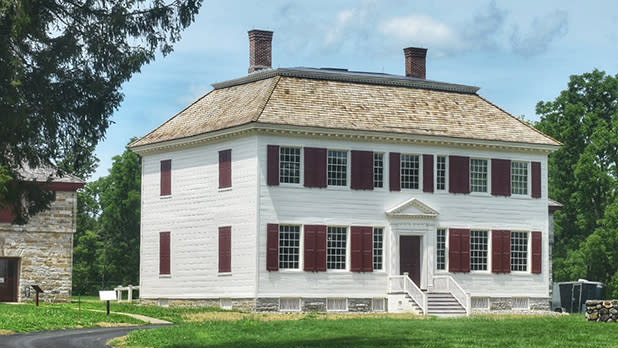
WHAT HAPPENED: In one of the last battles in the Mohawk Valley, American forces defeated Loyalists, marking the decline of British influence in the region.
VISIT TODAY: The Johnson Hall State Historic Site (pictured) offers a glimpse into the war’s final chapters in New York State. Once the home of influential colonial administrator Sir William Johnson, the estate was inherited by his son who fled to Canada at the outbreak of the war before Continental forces confiscated the property. Tour the historic Georgian estate, walk the grounds and gardens, explore exhibits, and discover the history of the Johnson family, Indigenous communities, and Mohawk Valley in the time of war.
14. George Washington Creates the Purple Heart (August 7, 1782)
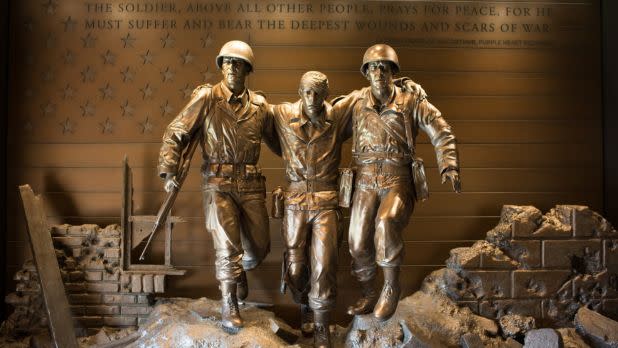
WHAT HAPPENED: From his Newburgh headquarters, George Washington established the Badge of Military Merit, which was made of a purple, heart-shaped cloth. The badge was awarded to three Revolutionary War soldiers. It was not awarded again until the badge was renamed and redesigned as the Purple Heart in 1932 for the bicentennial of Washington’s birth.
VISIT TODAY: Visit the National Purple Heart Hall of Honor (pictured) in New Windsor, which is dedicated to collecting, preserving, and sharing the stories of Purple Heart recipients. Galleries take you through the Purple Heart Journey, from entering military service and training, to the day of the incident, to care and treatment through the road to recovery. A separate gallery commemorates those who have made the ultimate sacrifice. The Purple Heart Hall of Honor is located at the New Windsor Cantonment State Historic Site, the final encampment of the Continental Army during the American Revolution, which demonstrates what life would have been like for the 7,500 soldiers who lived there in the final months of the war through reconstructed buildings, costumer interpreters, reenactments, and museum exhibits.
15. The Newburgh Address (March 15, 1783)
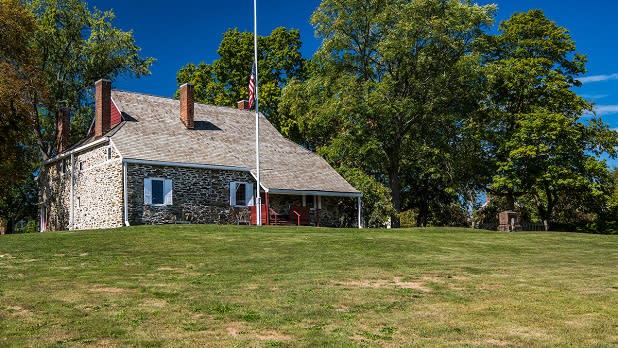
WHAT HAPPENED: In the final months of the Revolutionary War, George Washington addressed unrest among officers over unpaid wages that had stirred in Newburgh. In an emotional appeal he managed to ease tensions and defuse a potential military coup, keeping the army united.
VISIT TODAY: Step inside Washington’s Headquarters State Historic Site (pictured) in Newburgh, where Washington spent the most time during the Revolution making decisions that shaped the early United States. See inside Washington’s office in the Hasbrouck House (currently closed for renovations), visit the Tower of Victory, explore the grounds, and gain insight in the museum into Washington’s leadership, including his rejection of an American monarchy, his role in calming the Newburgh crisis, and his vision for the new nation.
16. Evacuation Day in New York City (November 25, 1783)
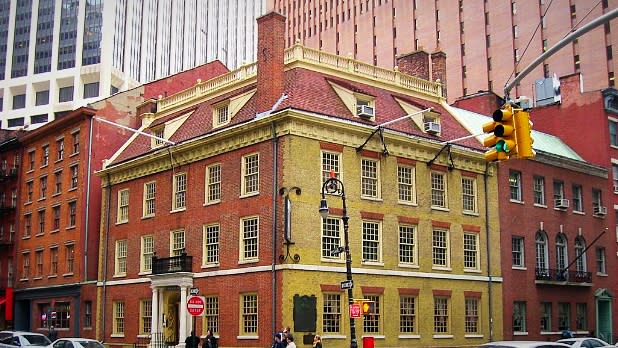
WHAT HAPPENED: The last British forces evacuated New York City, marking the end of their seven-year occupation of New York City. After reclaiming Fort Washington, General George Washington led a parade down Broadway before attending a celebratory dinner hosted by Governor George Clinton at Fraunces Tavern.
VISIT TODAY: Walk in the footsteps of George Washington following the same historic streets to the Fraunces Tavern Museum (pictured), one of Manhattan’s most important Revolutionary War landmarks. Today, you can stand in the very same room Washington did when he bid farewell to his officers on December 4, 1783 and explore the museum’s collection of artifacts, paintings, drawings, and documents that preserve the stories of the revolution. Fraunces Tavern still serves as a restaurant and bar, so you can even grab a meal or drink in the city’s oldest and most historic bar.
Just as the war continued on for years, New York State commemorates the important moments of our journey to independence throughout 2026 and beyond. Explore events and exhibits happening statewide.
