
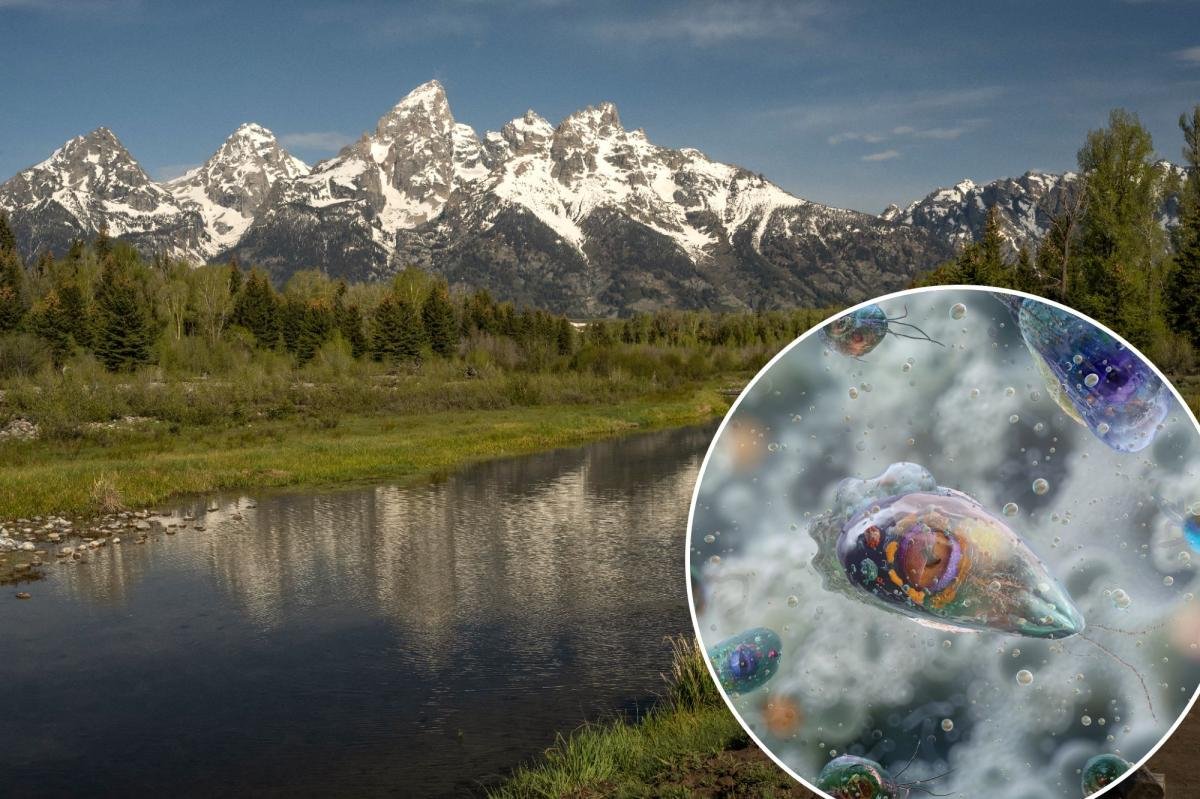

These invisible invaders are getting some peace of “mind” on your vacation.
Often associated with big skies and purple mountains majesty, the US National Parks are increasingly becoming a cesspool for an insidious scourge — brain-eating amoebas.
Researchers with the US Geological Survey and Montana State University found the parasitic interloper at thermal zones in three major National Parks: Lake Mead National Recreation Area, Grand Teton National Park, and Yellowstone National Park, ABC Utah reported.
According to a study published in ACS Publications, some of these areas were previously not known to harbor the invader.
Dubbed Naegleria fowleri, this microscopic monster is known for infiltrating swimmers’ noses and taking root in their brains, infecting them with primary amebic meningoencephalitis. This exceedingly rare condition is fatal 97% of the time, per the Centers for Disease Control and Prevention.
The critter generally inhabits monster predominantly resides in warm freshwater all over the world, including lakes, rivers and hot springs, and can even show up in poorly-maintained swimming pools — although it cannot inhabit saltwater
While traditionally associated more with hotter climates in the South, scientists claim that warming temperatures are allowing the amoeba to migrate North, such as in water bodies to the West.
The team was interested in determining the creature’s presence in various recreational warm water sites at US National Parks. From 2016-2024, they collected and studied 185 samples from 40 sites spanning five national parks: Yellowstone National Park, Grand Teton National Park, Olympic National Park, Newberry National Volcanic Monument, and Lake Mead National Recreation Area.
The amoeba showed up in a staggering 34% of samples, all of which originated from the aforementioned trio of parks.
However, the parasite also reared its head in some spots where it had never been detected, including Lewis Hot Springs in Yellowstone National Park, Polecat Hot Springs in Grand Teton and Boy Scout Hot Springs in Lake Mead.
“These findings indicate that N. fowleri is present in thermally impacted areas across the western United States and underscore the use of enhanced monitoring, public awareness, and risk management strategies in thermally influenced recreational waters,” the researchers wrote.
This becomes increasingly important as the parasite expands its global footprint.
Thankfully, there are a few things bathers can do to mitigate the risk of infection, including avoiding swimming in warm stagnant bodies of water.
Failing that, swimmers should limit exposure to potentially contaminated water by keeping their heads out of the drink and pinching their noses when jumping in.
Fortunately, these amoebas cannot spread from person-to-person or be contracted by drinking contaminated water.
