

Buckle up and hit the road on a revolutionary journey through New York State history! In commemoration of America’s 250th anniversary, we’ve put together a lineup of some of the state’s most storied Revolutionary War sites, monuments, historic estates, and battlefields so you can build your own unforgettable road trip.Step back in time at Washington’s Headquarters in Newburgh, roam the battlefield of two of the Revolution’s most pivotal battles, and immerse yourself in the events leading up to the United States’ first victory at Fort Ticonderoga. Create your own amazing New York State road trip and start planning your America 250 adventure. Photo credit: @capitalsaratoga on Instagram.
During the Revolution, the Hudson Valley was known as the strategic heart of the war due to its role in connecting New England to the rest of the rebellious colonies. If you’re looking to explore one of the last Revolutionary War battles in the region, check out Stony Point Battlefield State Historic Site. It was here where General Anthony Wayne led his specially-trained Corps of Light Infantry on July 16, 1779 to storm the fort, capturing its garrison, supplies, and British Lieutenant Colonel Henry Johnson in just 25 minutes.
Explore the site’s museum with exhibits on the Battle of Stony Point and Stony Point Lighthouse, the oldest lighthouse on the Hudson River, and catch interactive programs like living history camp showing 18th-century military life, cannon and musket firings, and cooking demonstrations in the summer.
Called the “key to America” by George Washington because of its strategic location on the Hudson River, West Point played an important role in securing American victory in the Revolutionary War. Not only was it the site where Washington headquartered for four months in 1779, it was also where the 65-ton “Great Chain” connected to Constitution Island, preventing the passage of enemy ships.
Today, West Point is America’s oldest continuously-occupied military post and oldest military school in the country with all kinds of history to uncover. Check out the West Point Museum, filled with military artifacts and documents, then take a self-guided tour around campus, where you can make stops at landmarks like Trophy Point and Battle Monument (pictured), with spectacular views of the Hudson River, the Plain, which has real chain links from the “Great Chain,” Battle Monument, the West Point Cemetery, and Cadet Chapel. You can also opt to take a guided tour with West Point Tours, offering a special 250th River and the Rock tour from June-August, where you’ll get to see Fortress West Point and explore West Point’s role during the Revolution.
As the nation’s first publicly-owned historic site, Washington’s Headquarters in Newburgh offers visitors a glimpse into the house that General Washington called headquarters for more than 16 months. During his time here, Washington made some of his most important contributions to the American republic such as rejecting the idea of American monarchy, creating the Badge of Military Merit (now known as the Purple Heart), and declaring the cessation of hostilities and disbanding the army.
Take a guided tour of the Hasbrouck House (currently closed for restorations until mid-April), built in 1750. You’ll also find the museum on-site with two floors of galleries and exhibits about George Washington and the headquarters as well as 1,300 historic objects.
During the Revolution, New York’s first capital of Kingston was the meeting place for independent-minded colonists who wrote the New York State Constitution in 1777. A month later, Kingston was burned to the ground by the invading British army.
Now, this city is as vibrant as it is historic with a flourishing arts and culture scene as well as numerous historic sites. Step back in time at the Senate House State Historic Site, a simple stone house of a local merchant where New York’s first senate met. The intersection of Kingston’s John and Crowd Streets, known as The Four Corners, is the only intersection in the country where the buildings on all four corners were built pre-Revolutionary War. The buildings include the Matthewis Persen House, the Dr. Matthew Jansen House (the oldest building, dating back to the mid-1600s), the Franz Roggen House, and Kingston Academy, which is now home to Rough Draft Bar & Books.
Old Dutch Church is another must-stop, founded in 1659. The surrounding churchyard is home to a historic burial ground where notable figures including 70 Revolutionary War soldiers and New York’s first governor, George Clinton, are buried. The church itself offers self-guided tours, a church museum, and regular worship services.
Located in Germantown, Clermont State Historic Site is a must-stop for those looking to learn more about the families who played a role in the Revolution. Once the country estate of the Livingston family for several generations, Clermont Mansion was originally built around 1740 by Robert Livingston, who was a member of the Continental Congress and helped draft the Declaration of Independence. In October 1777, the mansion was burned down by British soldiers because of the family’s support of the rebels. Take a tour of the mansion decorated as it appeared in the 1930s, explore exhibits about Clermont and the Revolutionary War, and wander the beautiful gardens, grounds, and five miles of nature trails.
Looking to add even more Hudson Valley history to your trip? Check out more historic sites, forts, and battlefields along the Revolutionary War Path Through History.
Explore Revolutionary History in the State Capital (Capital-Saratoga)
Stop 1: Crailo State Historic Site
📍9 1/2 Riverside Avenue, Rensselaer, NY 12144
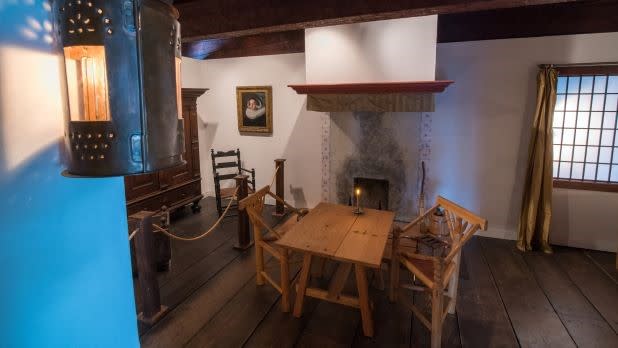
Built in the early 18th century, Crailo State Historic Site was the Van Rensselaer family home and block house. It was also sometimes referred to as a fort and became an important muster place for troops in the French and Indian War and later in the Revolutionary War. Wander the historic site on a tour, where you’ll get to see a museum about the colonial Dutch, a recreation of a Dutch House room and cellar kitchen, and exhibits highlighting archeological finds from the Albany Fort Orange excavations.
Stop 2: Schuyler Mansion State Historic Site
📍32 Catherine St., Albany, NY 12202
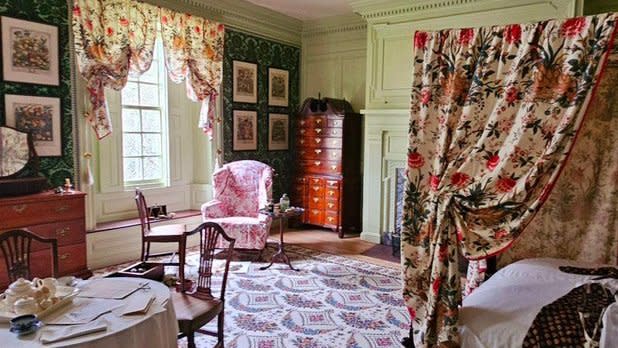 Credit: @thetreygibbons on Instagram
Just five minutes away is Schuyler Mansion State Historic Site in Albany, once the home of Revolutionary War general and US Senator, Philip J. Schuyler and the Schuyler family from 1763-1804. Over the years, the mansion was used for military strategizing, entertaining famous guests such as Washington, Jefferson, Franklin, LaFayette, and others, as well as the wedding of daughter Elizabeth Schuyler to Alexander Hamilton in 1780. Learn about it all and more on a guided tour of the elegant mansion and exhibition in the visitor center focusing on Philip Schuyler’s life.
Stop 3: Empire State Plaza and New York State Capitol
📍Washington Avenue and State Street, Albany, NY 12242
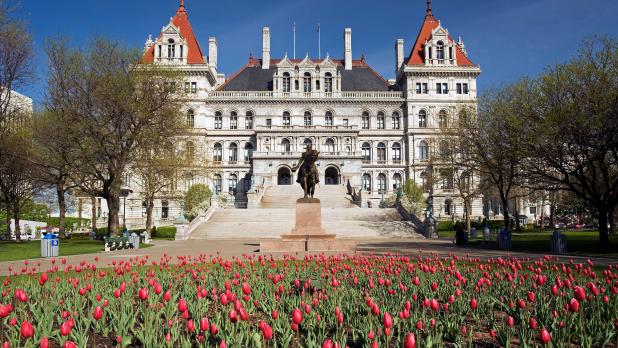
Nearby is the heart of New York’s capital city. While the Empire State Plaza and New York State Capitol (pictured) are not Revolutionary War sites, they’re still must-stops for learning about the state’s history. The Empire State Plaza is home to The Egg, Corning Tower, the tallest skyscraper in the state outside of New York City, and the New York State Museum where you can explore the history of the state. On a guided tour of the New York State Capitol, you’ll get to see highlights like the Million Dollar Staircase, Senate Chambers, and Hall of Governors, featuring the portraits of past governors including George Clinton, who was inaugurated during the Revolutionary War.
Looking to add even more Capital-Saratoga history to your trip? Check out more historic sites, forts, and battlefields along the Revolutionary War Path Through History.
Trace the Road to the Turning Point (Capital-Saratoga)
Stop 1: Bennington Battlefield State Historic Site
📍5231 Route 67, Walloomsac, NY 12090
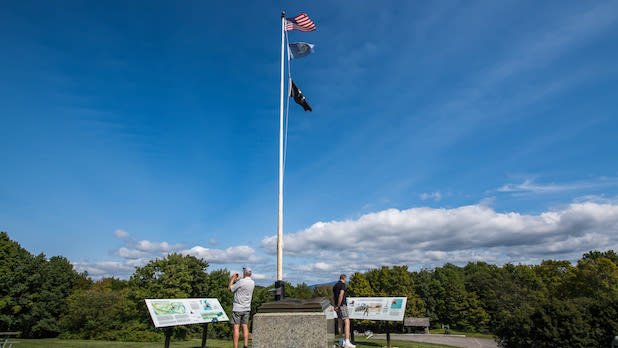
Learn about the events leading up to one of the war’s most significant events at Bennington Battlefield State Historic Site in Walloomsac. It was here where the New Hampshire, Vermont, and Massachusetts militia held off a British attempt, led by General John Burgoyne, to capture American stores on August 16, 1777. The battle ended in American victory, and as a result, General Burgoyne’s army suffered huge losses, failing to gather the supplies needed to head to Albany and later surrendering to the Americans after the Battles of Saratoga on October 17, 1777.
Today, you can roam the battlefield for yourself, where you’ll find a series of interpretive signs, a 2.7-mile trail system, and information building. During the operating season, you can also wander the site on a guided tour by appointment only and be sure to check the schedule of special events.
Stop 2: Saratoga National Historical Park
📍648 Route 32, Stillwater, NY 12170
 Credit: @capitalsaratoga on Instagram
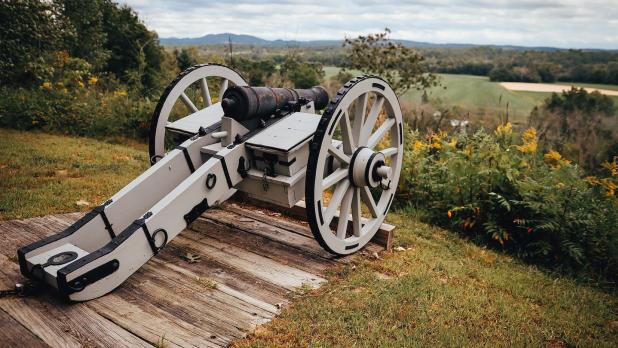
Home to the Saratoga Battlefield, Philip Schuyler’s country house, Saratoga Monument, Saratoga Surrender Site, and Victory Woods, Saratoga National Historical Park offers visitors the opportunity to uncover the history of one of the most important moments in American history and the turning point of the Revolutionary War.
Stop into the visitor center, where you can watch a 20-minute film about the site and grab a map to take a self-guided walking or driving tour of the battlefield. Walk through Victory Woods, the final encampment site for the British Army under General Burgoyne. Admire the place where the first ever surrender by a British Army took place at the Saratoga Surrender Site and learn about British General Burgoyne’s surrender to American General Horatio Gates at the 155-foot Saratoga Monument, which stands where Burgoyne’s camp entrenched during the campaign’s final days.
Discover the Story of America’s First Victory (Adirondacks)
Stop 1: Fort Ticonderoga
📍102 Fort Ti Road, Ticonderoga, NY 12883
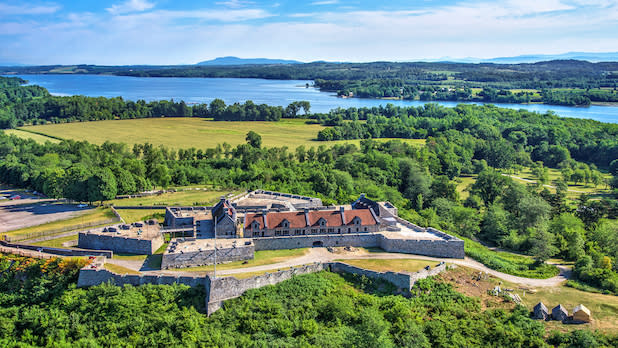 Photo courtesy of Fort Ticonderoga / Carl Heilman II
Strategically-located on the shores of Lake Champlain, Fort Ticonderoga was occupied by the British until 1775 when a band of Green Mountain Boys captured it just weeks after Lexington and Concord, making it the first American victory in the Revolution. Walk the halls of the restored fort for yourself on a self-guided tour, where you’ll get to admire the fort’s interior, including barrack rooms, and check out museum galleries with extensive collections of 18th-century weapons and artifacts. Throughout the operating season, the fort also holds exciting programs including Real Time Revolution Living History Events, artillery demonstrations, boat tours, guided tours, and more, all backdropped by acres of spectacular scenery.
Stop 2: Crown Point State Historic Site
📍21 Grandview Drive, Crown Point, NY 12928
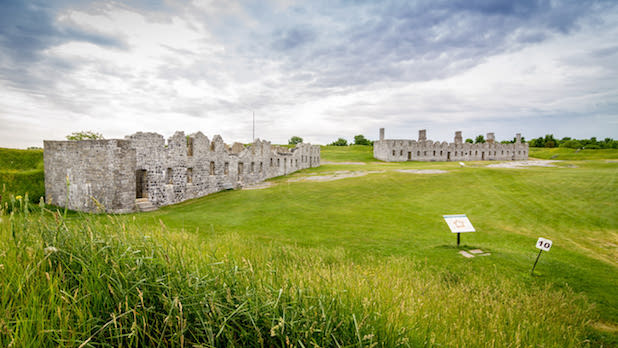
Before the Revolutionary War, Crown Point was home to the French Fort St. Frederic, which was later abandoned and taken over by the British in 1759. At the outbreak of the American Revolution in 1775, the fort was captured by the colonists until 1777 when it was recaptured by General Burgoyne’s army and remained under British control until the end of the war. Today, you can explore the preserved ruins of the French Fort St. Frederic and the British Fort, one of the largest British fortifications in North America, and tour the museum with multimedia exhibits, original artifacts.
Experience the American Spirit of 1777 (Central New York)
Stop 1: Fort Stanwix National Monument
📍100 N. James Street, Rome, NY 13440
 Credit: @daytrippingroc on Instagram
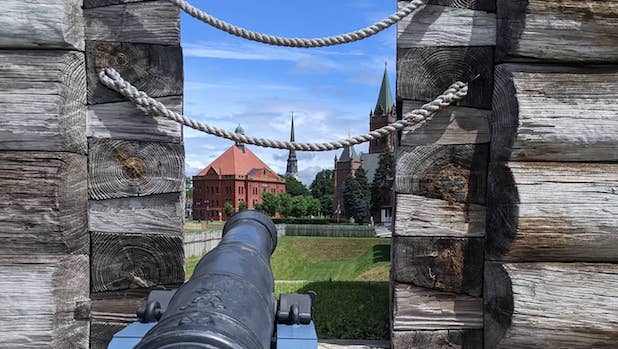
Known as the fort that “never surrendered,” Fort Stanwix played a vital role in the American Revolution. After the successful defense of the fort against the British in August of 1777, this historic fort became the only American post never to surrender to the enemy throughout the entire American Revolution. Today, you can explore a full-scale reconstruction of the original fort built in 1758, watch living history demonstrations, walk along the ancient trail called the Oneida Carry and learn its history, and admire the monument.
Stop 2: Oriskany Battlefield State Historic Site
📍7801 State Route 69, Oriskany, NY 13424
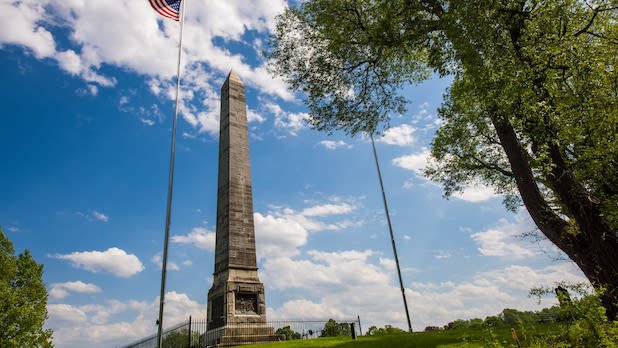
Just 10 minutes from Fort Stanwix is Oriskany Battlefield State Historic Site, a significant turning point in the Revolutionary War, described as one of the most intense battles. Despite heavy losses, the Americans were still able to get their opponents to retreat with the help of the Oneida, the only Haudenosaunee Nation to side with the Americans, cemented their legacy as America’s First Allies. Visitors today can walk the site and admire the monument, take a look at interpretive signs, and explore the exhibit in the visitor center.
Walk through a Star-Shaped Fortress on Lake Ontario (Thousand Islands-Seaway)
Stop 1: Fort Ontario State Historic Site
📍1 E Fourth St., Oswego, NY 13126
 Credit: @eldonlindsay on Instagram
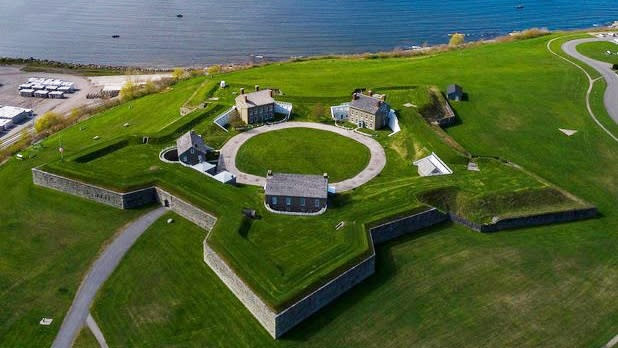
Discover the history of the star-shaped Fort Ontario in Oswego. The fort that stands today was built in the early 1840s and is one of four fortifications. The original fort was built by the British in 1755 and a second in 1759, which was destroyed by American troops in 1778 during the Revolution. Take a self-guided walking tour of the fort which includes stops at army offices, guardhouses, officer’s quarters, barracks, stone artillery casemates, and rifle galleries, catch living history demonstrations highlighting the stories of the fort during the American Revolution, and soak up spectacular views of Lake Ontario.
Soak up History and Views at a Great Lakes Stronghold (Greater Niagara)
Stop 1: Old Fort Niagara
📍102 Morrow Plaza, Youngstown, NY 14174
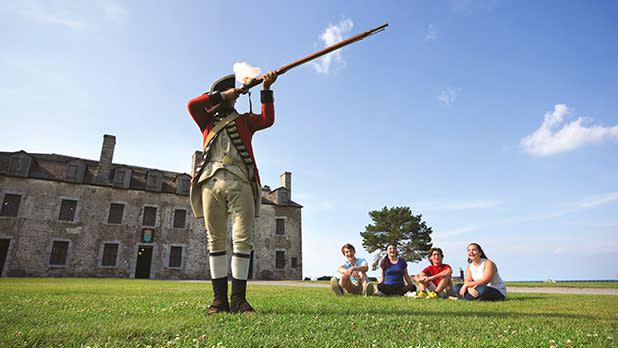
Located at the entrance of the Niagara River, Old Fort Niagara controlled access to the Great Lakes and beyond, making it a strategic location throughout history. During the fort’s 300-year history, it’s been occupied by France, Great Britain, and the United States, and served as a base for the British to conduct devastating frontier raids in the Revolution. Spend time touring the historic grounds that include 18th-century fortifications and the oldest building in the Great Lakes region, the “French Castle.” In the summer, be sure to check the schedule for programming like historic weapons demonstrations, Native American History and Women of the Army programs, military music performances, and Niagara County’s official America 250 Celebration from August 1-2, 2026.
Follow the Secret Path to Victory on Long Island
Stop 1: Washington Spy Trail
📍111 Main Street, Stony Brook, NY 11790
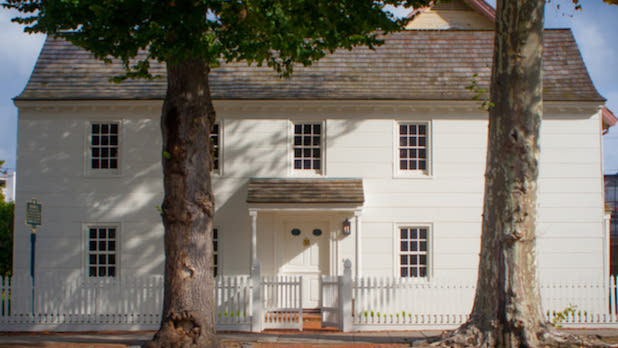
Delve into the secrets of the North Shore along the Washington Spy Trail. Running along the Long Island Sound, mainly on Route 25A, the spy trail highlights the harbors and inlets where patriot spies departed from to deliver crucial intelligence to Connecticut and General Washington. Follow the trail for yourself to discover stops like the Raynham Hall Museum, home of George Washington’s intelligence operative Robert Townsend, Caumsett Historic State Park, and quaint historic towns like Port Jefferson, Oyster Bay, and Roslyn.
Relive the Revolution in New York City
Stop 1: Hamilton Grange National Memorial
📍414 West 141st Street, New York, NY 10005
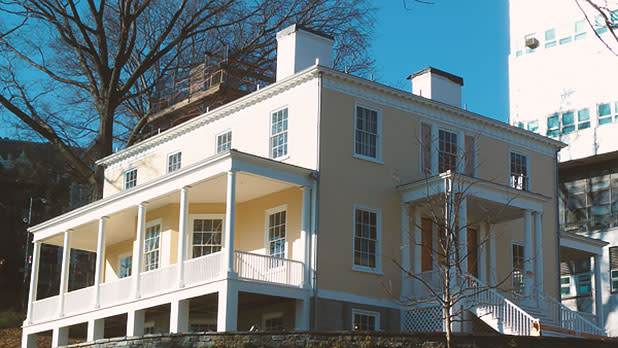
Fans of Broadway’s Hamilton will want to visit the Hamilton Grange National Memorial, which preserves the home of founding father Alexander Hamilton. Completed in 1802, just two years before his death in 1804, the Grange stands today as a tribute to Hamilton’s many accomplishments. Visitors can tour the restored home and exhibits on a free historic tour and the beautiful outdoor grounds are free to roam year-round.
Stop 2: Morris-Jumel Mansion
📍 Roger Morris Park, 65 Jumel Terr, Manhattan, NY 10032
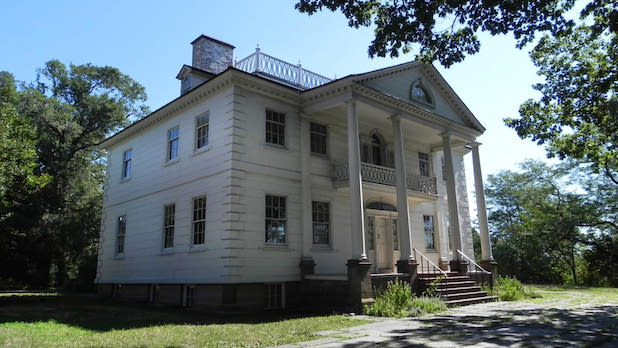
Just eight minutes away is the Morris-Jumel Mansion. Originally built as a country retreat by Roger and Mary Morris in 1765, during the American Revolution the mansion became a headquarters for General Washington. Today, it’s one of the nation’s most historic houses and Manhattan’s oldest remaining residence. Book a guided or self-guided tour to walk the halls of the mansion and explore the permanent exhibit, “Life Below Stairs.”
Stop 3: Old Stone House Historic Interpretive Center
📍336 Third St., Brooklyn, NY 11215
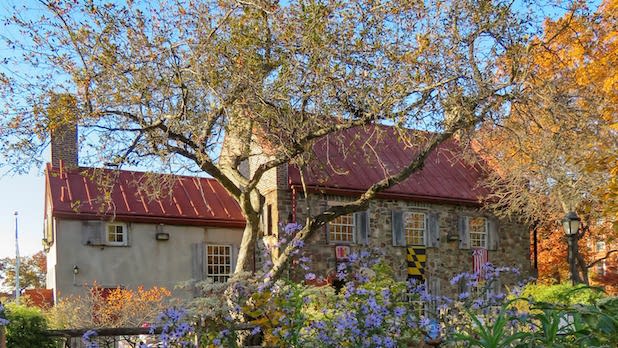
About a 40-minute drive or hour subway ride will land you in Brooklyn at the Old Stone Historic Interpretive Center. In August 1776, during the Battle of Brooklyn, Old Stone House was used as an artillery position by an estimated 2,000 British and Hessian soldiers, who fired on Americans fleeing to Washington’s encampment in Brooklyn Heights. Now located in a 1699 Dutch farmhouse, Old Stone House Interpretive Center tells the story of the battle, the first major engagement of the Continental Army after the Declaration of Independence, through engaging exhibits. The site is also home to vibrant gardens, contemporary art exhibits, and a Sunday Farmers’ Market. Be sure to mark your calendar for the Battle of Brooklyn 250th Commemoration on August 22, 2026!
Discover even more historic sites throughout Lower Manhattan such as Trinity Church, Fraunces Tavern, and Federal Hall along the NYC Revolutionary Trail.
Don’t forget to post photos of your New York adventures on Instagram and X with #iSpyNY and tag us on Facebook!
