

Walt Whitman famously professed in his poem ‘Song to Myself’ to “contain multitudes”, and in doing so encapsulated the mysteries of the human condition and the idea that people are, in many respects, completely unknowable. As a viewer, this iconic quotation came to mind the first time I encountered Joachim Trier’s 2011 film, Oslo, August 31st, about a drug addict’s fruitless attempts to turn his life around upon leaving rehab. Our perceptions of this man, played by one of Trier’s most fruitful collaborators, Anders Danielsen Lie, and the litany of personal failures that would’ve led him to this sorry moment, is undercut by the filmmaker’s belief in two things: one, that it’s implicit to human nature that we should hide our true selves from view; and two, that cinema is a beautiful tool when it comes to revealing those moments of the subtle sublime. Casually, in the final act of the film, we discover that the protagonist is also a very handy classical pianist, and the distance of his fall from grace instantly extends without a word being spoken. It’s an extremely moving moment.
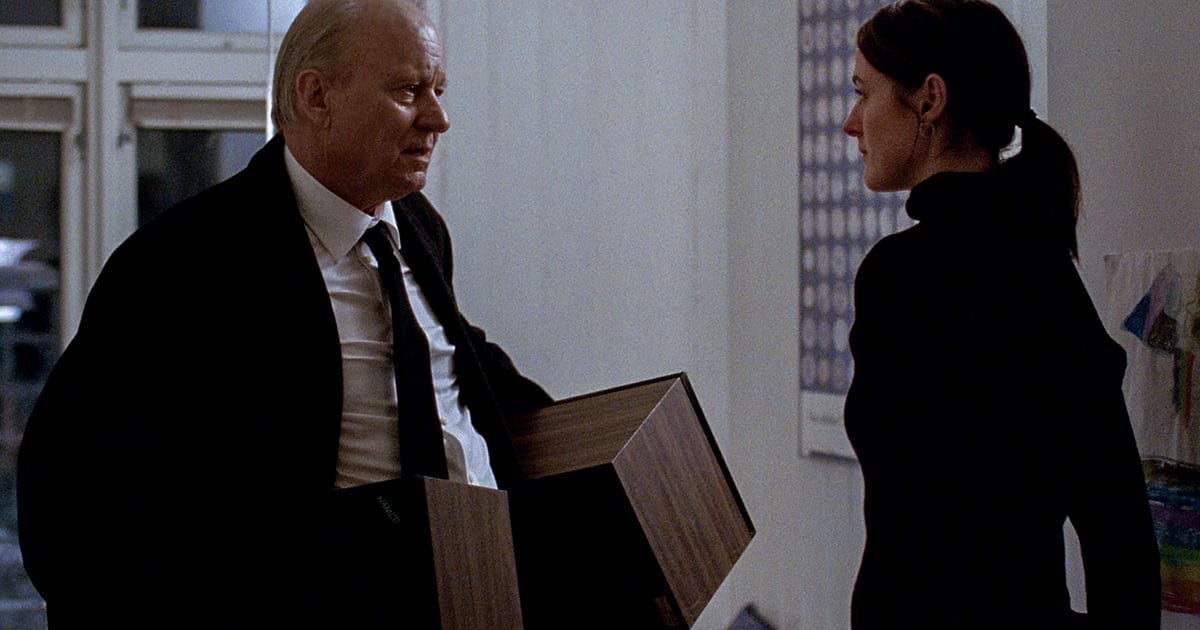
Trier and his trusty co-writer Eskil Vogt have almost developed their own unique brand of screen sensitivity, where “difficult” characters are redeemed, heroic characters are chastised, and everyone is presented in a manner that flips back and forth between the poles of love and hate. In the Academy Award-nominated Sentimental Value, lauded theatre actress Nora Borg (Renate Reinsve) is shown having a comic flame-out ahead of an opening night performance, suddenly deciding she doesn’t want to go on stage and having to be physically restrained from running off into the night. The sequence is presented in a comic light, and she does eventually make it through the play (to great acclaim!), yet the machinations that unfurl after this moment ask us to reconsider just how funny Nora’s freak-out actually was. People don’t just become overwhelmed with anxiety for a reason, and what we discover is that she is trapped in a spiral of melancholy that was set off when her filmmaker father Gustav Borg (Stellan Skarsgård) left her mother for another woman.
Get more Little White Lies
Yet Trier is not so quick to deduce that A + B = C when it comes to the cause and effect of personal psychologies, and Sentimental Value takes great pleasure in assiduously working through its characters’ foibles, traumas, upsets and disappointments. And it does so in a way that is both witty and uplifting, attempting to put together all the pieces of the human jigsaw puzzle, but accepting that everyone is going to have a few key pieces missing. Reinsve also got to run out a more unreconstructed version of the eternal neurotic in 2021’s ironically titled The Worst Person in the World, as she played a young woman unable to settle on a sensible metric for success and fulfilment. The film collects up her sometimes-madcap adventures in the world of self-improvement, but charts the emotional fallout that she sometimes can’t see and doesn’t comprehend.
Worst Person… and Sentimental Value are cut from similar cloth when it comes to their interest in people plumbing the depths of despair, but they are also concerned with the moral implications of our actions. Gustav Borg is ruthlessly driven and self regarding and when it comes to being the centre of his own filmmaking process, humiliating both Nora and his other more level-headed daughter Agnes (Inga Ibsdotter Lilleaas) in his various pleas to have his family collaborate on his latest opus. He has no idea that the fury he evoked years ago has yet to subside, and Nora in particular comes to realise that the consoling qualities of making art are limited at best. But these complex conflicts and near-misses of self-annihilation can be worked through to an extent, and Trier affirms that there is common ground among us all – we just have to be correctly motivated to search for through the multitudes.
As a little addendum to this piece, we post above a brand new video essay by the editor and critic Luís Azevedo, which goes deeper into some of the moments mentioned above, highlighting Trier’s ebullient mix of levity, lyricism and insight in his explorations of human sorrow.
Joachim Trier’s Sentimental Value, along with his entire Oslo trilogy, are now streaming on MUBI. Sign up with 40% off for 12 months at mubi.com/lwl40
