
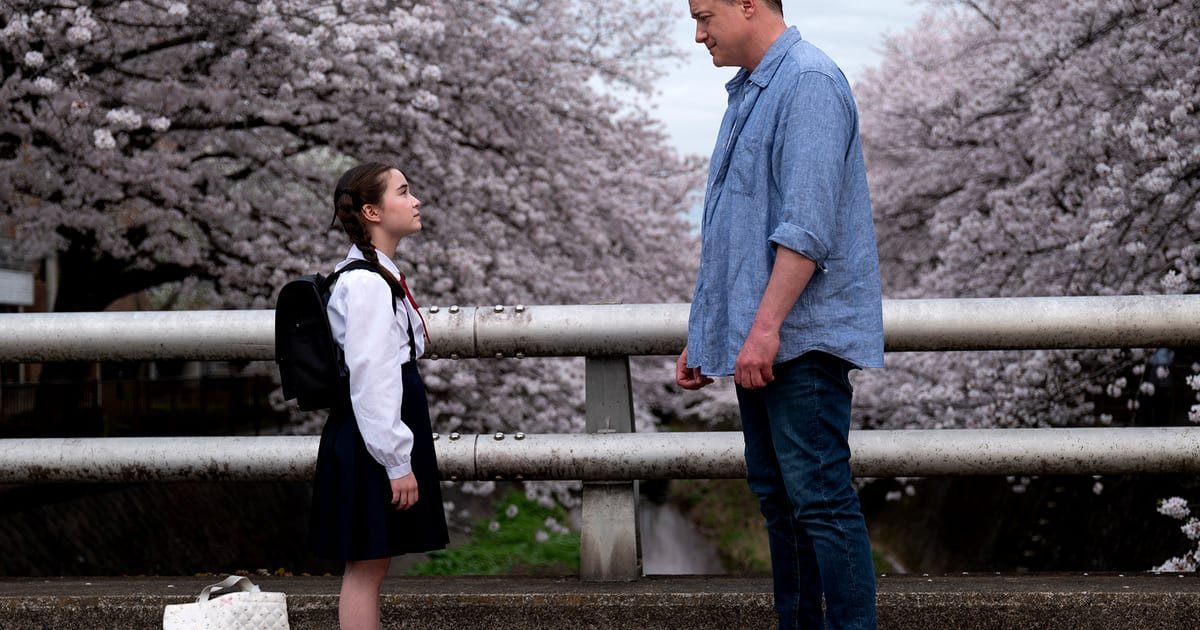

Since playing a toothpaste superhero in an advertisement, down-on-his-luck actor Phillip Vanderploeg (Brendan Fraser) has been living in Tokyo for several years and further opportunities have been thin on the ground. Accepting a day-long gig as “Sad American” at a funeral, where the dedicatee turns out to be alive in the coffin, he enters a whole world of for-hire make-believe for everyday people.
Echoing a similar dynamic seen in Lulu Wang’s The Farewell, our American protagonist is thrown by the idea of lying to and for real people. Phillip initially refuses an invitation by the Rental Family company, but after a fake wedding he starts to see how these elaborate deceptions can be a tool for good: “Sometimes all we need is someone to look us in the eye and remind us we exist,” his co-worker Aiko (Mari Yamamoto) explains. But a serious test comes along, the role of a lifetime – to be a father to a little girl.
Get more Little White Lies
With a shiny and bright vision of Tokyo, the director Hikari smooths over any moral qualms through endearing montages of happy customers and fun costumes, exploring this thorny topic within a safe and comfortable sandbox. Fraser plays a bumbling, affable outsider, eager to please and predictably getting too emotionally involved in the lives of his clients, making promises he cannot keep. The story centres on Mia (Shannon Mahina Gorman), whose mother wants Phillip to pretend to be her father so that they can pass a private-school parents interview. Mia is a boisterous, opinionated and creative child, and Phillip gets a healing insight into fatherhood when it transpires that his own father wasn’t present in his life.
There is an evolution within the score, by Alex Somers and Jónsi, which goes from quite a bubbly use of bells akin to Disney’s Inside Out down to pared-back piano as the story goes beyond the superficial and gets deeper. But while directors like Hirokazu Kore-eda could have gone more off the rails and psychologically untangled this web of ethics, a promisingly challenging concept is kept on the track of story beats you can see coming a mile away.
One sub-plot involves Aiko playing mistresses that apologise for affairs, which does more accurately identify and vilify a flaw in the system but, for example, Phillip’s casual use of a friendly sex worker for company goes unscrutinised, as does his boss Shinji’s own use of the Rental Family service. In only covering a short period of time, there’s a perhaps unearned sense of resolution, when these journeys towards self-discovery and social fulfilment take much more work than these plasters.
An American impulse for neat endings and recognisable stories gets in the way, but Rental Family is still beautifully written and gives little windows into Japanese life, from a Monster Cat festival to a rural diversion with breathtaking scenery, with Fraser’s endearing everyman as an emotional linchpin that viewers will love.
