
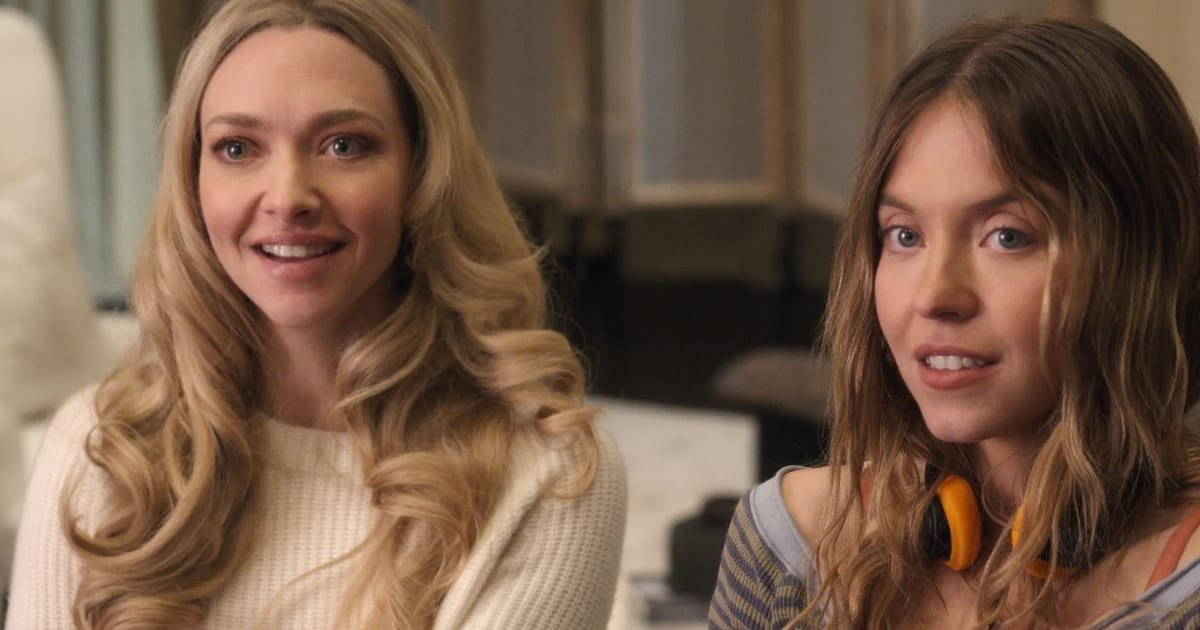

I first became acquainted with Freida McFadden’s New York Times bestselling thriller ‘The Housemaid’ earlier in 2025, when I stumbled across a YouTube video entitled “Is this the worst book ever written?”. Intrigued by the title I clicked – the reviewer gave a detailed review of McFadden’s book, which concerns a young ex-con who takes a maid position in an affluent upstate New York household only to discover her new employers aren’t as perfect as they appear to be. While “worst book ever written” is perhaps a tad harsh, the novel is the sort of pulpy, first-person mystery that values shocking twists over elegant prose and found an audience on TikTok because of its outrageous plot and “spicy” content. With money on the table, it was only a matter of time before McFadden’s book received a big screen adaptation. A glossy one at that, directed by Paul Feig – no stranger to soapy plots – and starring Amanda Seyfried, Brandon Skelnar and controversy magnet Sydney Sweeney.
This is nothing new – The Housemaid follows in the footsteps of Fifty Shades of Grey and the wildly successful Colleen Hoover-verse (Hooveiverse?) that blew up the internet with the offscreen drama surrounding Justin Baldoni’s adaptation of It Ends With Us earlier this year. (Brandon Skelnar starred in In Ends With Us, which feels notable). This is but the latest chicklit trend to light up cinemas after the 2000s deluge of Nicholas Sparks adaptations and crime thriller era which peaked with Gone Girl and eventually led to the Netflix parody miniseries The Woman in the House Across the Street from the Girl in the Window. The Housemaid is a Frankenstein combination of the two – there’s misogynistic violence and steamy romance between impossibly good-looking movie stars with shiny hair and glowing skin, and both Lana Del Rey and Taylor Swift songs on the soundtrack, thereby signposting the film’s intended audience.
Get more Little White Lies
In a manicured, festive vision of the New York suburbs, Millie (Sydney Sweeney) lands a gig as a housemaid for Andrew and Nina Winchester (Brandon Skelnar and Amanda Seyfried) plus their daughter Cecelia (Indiana Elle). The home’s other employee is monosyllabic groundskeeper Enzo (Michele Morrone, of Netflix’s similarly soapy and successful 365 Days franchise and Feig’s Another Simple Favor) who seems to instantly dislike Millie for unknown reasons that will be conveniently revealed in the film’s third act. Over a needlessly long 131 minute runtime, Millie faces off against the increasingly erratic Nina while an attraction grows between her and Andrew.
Seyfried, to her credit, does a decent job of channeling Joan Crawford in Whatever Happened to Baby Jane? with her screaming, crying, throwing things performance, while Skelnar is a serviceable leading man, posing as the perfect husband to mask interior ill-intent. Sweeney is the weak link, unconvincing and wooden as a tough ex-con masquerading as the girl next door, though it’s hard to say how much is poor acting and how much is poor writing. As we crawl towards the inevitable third-act reveal that has been foreshadowed at every opportunity, The Housemaid is punctuated by sex scenes between Sweeney and Skelnar which stand in for character development (Skelnar physically picks Sweeney up five times in The Housemaid, which only becomes funnier with each subsequent instance) and provide brief relief from otherwise tedious domestic squabbles between Seyfried and Sweeney.
But the plot devolves into violent chaos, so does its plausibility, as if the story beats are delivered in such quick succession as to bamboozle the audience into going along with it. The Housemaid lacks the guile to transform its flaws into future camp classic material – it feels like a sign of the times: a film which holds the audience’s hand at every turn while gesturing at the very real issue of domestic violence, yet keeping things just light and sexy enough that no one will be bummed out this holiday season.
