
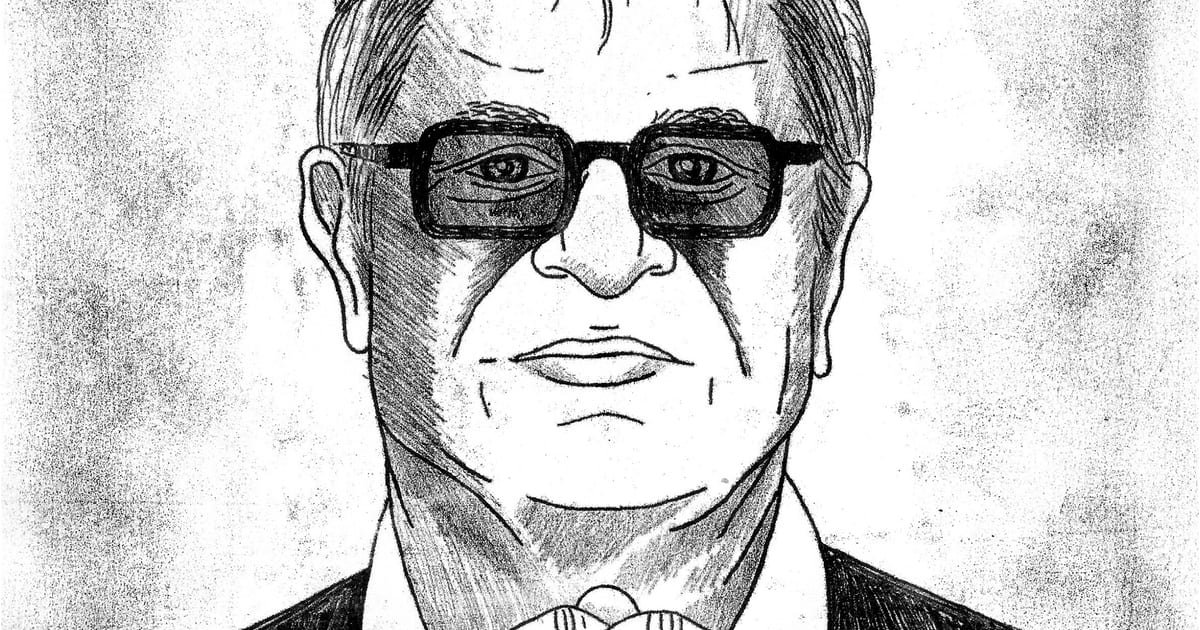

Jafar Panahi has had to navigate the most challenging set of circumstances in order to make films. Censored and persecuted by an authoritarian régime that has imprisoned him, placed him under house arrest and subjected him to filmmaking and travel bans, Panahi has always proved resourceful enough to find a way. With his Cannes Palme d’Or winner, It Was Just an Accident, the auteur tensely grapples with the ethical dilemma of how much blame can – or should – fall on the individual cogs of a systemically violent machine, urgently examining the complexity and humanity at the heart of Iranian society.
This interview was conducted with a translator and edited for clarity.
Get more Little White Lies
LWLies: With this film you’ve moved on from the more introspective mode of the films you had to make under more clandestine conditions to one that’s more open and forwardfacing. Did making this film feel any different?
Panahi: This film was still made in an underground way. It was still hidden as much as possible, but my past experiences with films made this way allowed me to come out of those restrictions a bit more. As long as there was safety for the team, we tried our best to make this film a bit more open. The first time I made a film like this we were entirely indoors. With Taxi, we had a camera hidden in the car, then we moved onto making films in smaller villages that were not as exposed. Eventually, we’re at this point, where we were able to make this film.
Many of the characters in the ensemble are not just survivors of physical torture but of moral injury too, having lost their trust in truth, in justice, in each other. Do you think that Iranian society has had a chance to process these collective wounds?
As people who are in that society and experiencing this, it obviously will affect their trust. Even if you are in a society where you’re told what to wear, everyone experiences this closed-offness and oppression in their own way. This affects the way you have to think about things. What we had the chance to do with this film is to make a point of having the characters express their own thoughts.
Was there a specific character that you identified with the most?
I try to be as neutral as possible and show the film in all its perspectives. It was important even letting the interrogator express what was important for that character, for him to be human as well. If I tried to take sides, the film wouldn’t be as effective or as truthful. I could have been more in line with the character in the bookstore, who already knew that the point of this whole excursion was pointless, and could have just left it at that. But that’s not my role in making this film.
Post-prison life under the régime can often be shaped by silence: names go unspoken, trauma is buried. Do you think that cinema has a moral responsibility to disturb those silences?
It is the government that enforces this silence. These days, a lot of prisoners that come out actually become louder than before they even went to prison and try to rebel against this enforced silence. They put them in prison to force that silence, but now we experience the opposite. Those who have experienced prison and the force of the government try to speak out a lot more about it, and this shows how the government becomes less effective in enforcing those silences. But they try to enforce them more and more, and with more and more brutality. At some point they will realise that they’re losing that grip. For example, the way they try to enforce the hijab on women… We see every day that women in Iran rebel against the hijab. This is not just something you might see in the cinema, it’s on all levels of society. I think we might be putting too much pressure on cinema to make these things bigger. With the ways we’re able to connect these days with social media, there are so many other ways for people to rebel. There was a time when all sorts of media were controlled by the government. Now, everyone has their own medium of expressing themselves and doing something immediate, in the moment, whereas any film has a process of maybe two-to-three years. For a film to have an effect, it obviously takes a lot longer. And in history, it remains and has a different impact than, say, a tweet. But we shouldn’t look at cinema too idealistically.
Your films are clearly made for a Persian audience, but audiences in Iran don’t get to see them. How do you reckon with that?
Unfortunately because of censorship, Iranian audiences never get to see my films in the cinema. I always wish that they would be the ones to see them first, and on the big screen. I hope that whenever it is that they get to see them, that they connect with them, but also realise that a film doesn’t have an expiry date. I’m happy to see that even after thirty years, people are still talking about The White Balloon and Offside and The Circle. It shows that they don’t have an expiry date, and I’m grateful for that.
